Dog Panting at Night: Anxiety, Pain, or Something Else?
Advertising disclosure: this article may contain affiliate links. We may earn a commission at no extra cost to you. It never changes our advice. How we fund our work
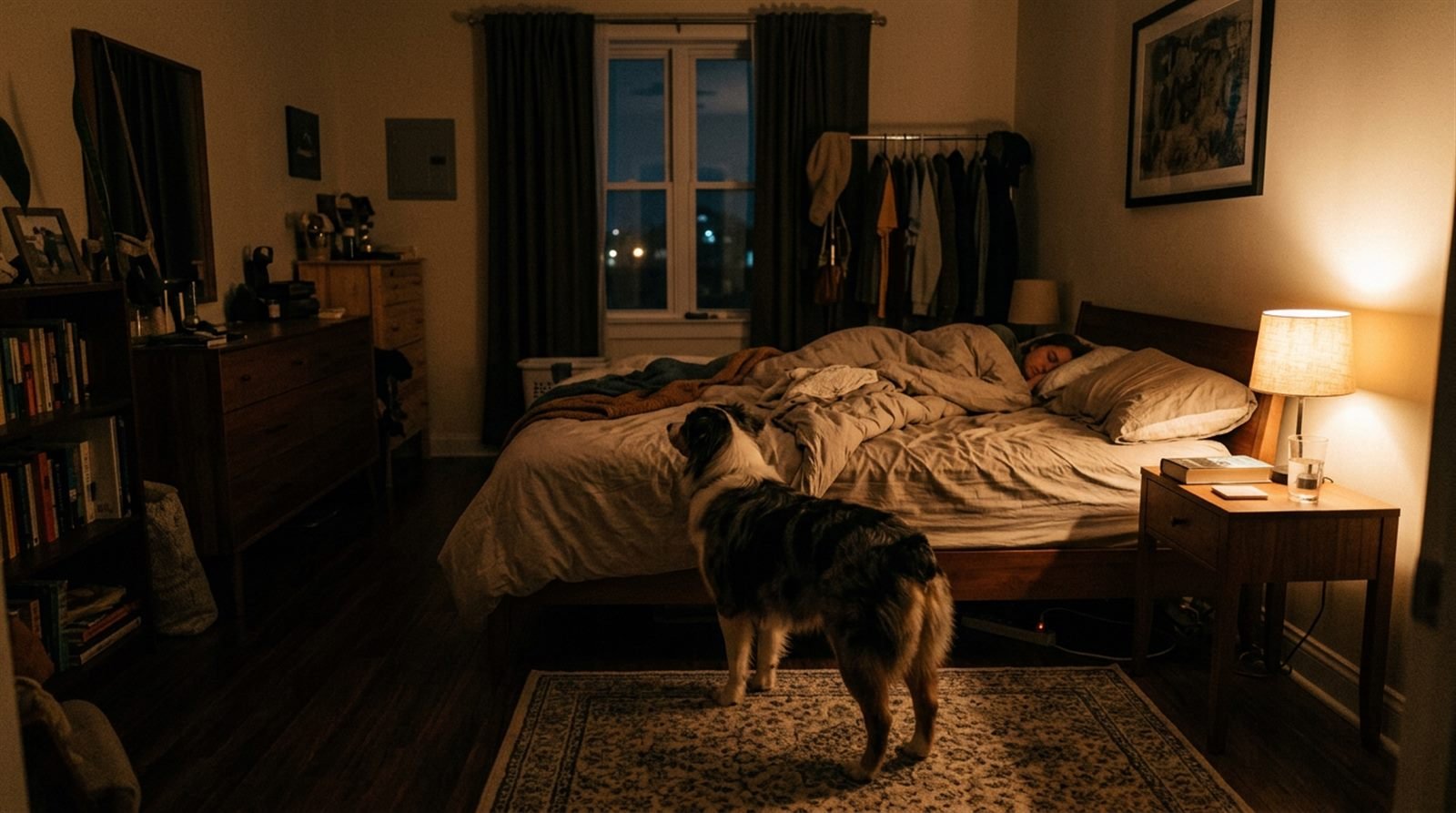
It is two in the morning and the sound has woken you again — that steady, wet panting from the corner of the room, on a night that is not remotely warm.
This is the one article on this site that leans hard toward "call your vet", and there is a reason. Night panting has a short list of likely causes, and more of them are medical than behavioral.
Panting cools a dog down. Panting with no heat to explain it is doing something else — usually signalling pain, stress, or a medical condition. In dogs over about seven, night panting with restlessness is a common early sign of arthritis pain or cognitive dysfunction. Because so many of the causes are physical, a veterinary exam should come before any behavior plan.
First: rule out the boring explanations
Before anything else, check the obvious. Is the room genuinely warmer than you think — radiator on, door closed, dog on a thick bed? Is your dog brachycephalic (a flat-faced breed such as a pug or bulldog), where laboured breathing is unfortunately common and worth discussing with a vet in its own right? Did something happen in the two hours before bed — a walk, a visitor, a rough game?
If none of those fit, work down the list below.
The likely causes, roughly in order
Pain
The most underdiagnosed cause of behavior change in dogs, and it surfaces at night for a simple reason: there is nothing to distract from it. Arthritic dogs are often stiffest after lying still, which is why night restlessness and a slow, careful start to the morning tend to arrive together.
Anxiety
Stress panting looks different from heat panting: shallower, faster, mouth corners pulled back, and almost always with pacing or an inability to settle. It is more likely if something changed recently — a move, a new baby, a household member gone. The other stress signals usually show up alongside it.
Canine cognitive dysfunction
In older dogs, a disrupted day-night cycle is one of the recognized signs. The pattern is distinctive: fine during the day, awake and unsettled at night, sometimes standing in corners or staring at walls. This is worth raising with your vet specifically, because it is manageable and often missed.
Medication
Some medications, steroids in particular, cause noticeably increased panting. If the panting started within a few weeks of a new prescription, that connection is worth a phone call.
Medical conditions
Several conditions list panting among their signs, including heart and respiratory disease, anaemia and certain endocrine disorders. This is exactly why the list ends at your veterinarian rather than at a product.
🚨 Go now, not tomorrow, if you see: pale, white or bluish gums · obvious struggling to breathe · collapse or weakness · a bloated, hard or painful abdomen · retching without bringing anything up.
These are emergency signs, not wait-and-see signs.
What to bring to the appointment
Vets can only work with what they are told, and panting is one of those things that never happens in the consulting room. Two or three nights of notes will make the visit far more useful:
- What time it starts, and whether it is the same time each night
- The room temperature — an actual number if you can
- Whether your dog settles at all, and for how long
- How the mornings look — stiff, slow, reluctant on stairs?
- What changed recently — routine, household, medication, diet
- A short video. Thirty seconds on your phone is worth more than any description you can give.
What actually helps at home
These support whatever your vet finds; none of them replace the appointment.
- Cooler and darker. Dogs sleep better a few degrees below what humans choose.
- A supportive bed. If pain is involved, a thin bed on a hard floor makes every hour worse. Orthopaedic foam is one of the few purchases with an obvious mechanism behind it.
- Steady background sound, if outside noise is part of the picture.
- A predictable wind-down. Same order of events every night — last toilet trip, lights down, settle. Predictability lowers arousal.
- No intense play in the last two hours. A dog that goes to bed still buzzing takes far longer to come down.
Frequently asked questions
Why is my dog panting at night when it is not hot?
The common causes are pain, anxiety, and in older dogs cognitive dysfunction, along with several medical conditions and some medications. Panting that is new, that happens on cool nights, or that comes with restlessness should be assessed by a veterinarian rather than treated as a behavior problem.
Is night panting a sign of pain in dogs?
It can be. Pain often becomes more noticeable at night when there is nothing to distract from it and the dog has been lying still. Arthritic dogs frequently show more discomfort after periods of rest, which is why night restlessness plus stiffness in the morning is a common pairing.
Can anxiety cause a dog to pant at night?
Yes. Stress panting is typically shallow and fast with the corners of the mouth drawn back, and it usually comes with pacing or an inability to settle. It is more likely if something has changed recently in the household or the routine.
When is dog panting an emergency?
Seek urgent veterinary care if panting comes with pale or blue gums, obvious difficulty breathing, collapse, a bloated or hard abdomen, or unproductive retching. Those signs need immediate attention rather than a wait-and-see approach.