When Is a Dog Considered a Senior?
Advertising disclosure: this article may contain affiliate links. We may earn a commission at no extra cost to you. It never changes our advice. How we fund our work
Somebody at the park says it first. "Oh, he's getting on a bit, isn't he?" And you go home and do the arithmetic and realize you genuinely do not know whether seven is old for your dog or nowhere near it.
The honest answer is that seven can be both. It depends almost entirely on how big your dog is.
There is no single age at which a dog becomes senior. Veterinary guidance defines it as the last quarter of a dog's expected lifespan — so it arrives at a different age for every size. Small breeds get there around 10 to 12, medium breeds around 9, large breeds around 7 to 8, and giant breeds as early as 6. What actually changes on that day is not your dog. It is how often the dog should be seen by a vet.
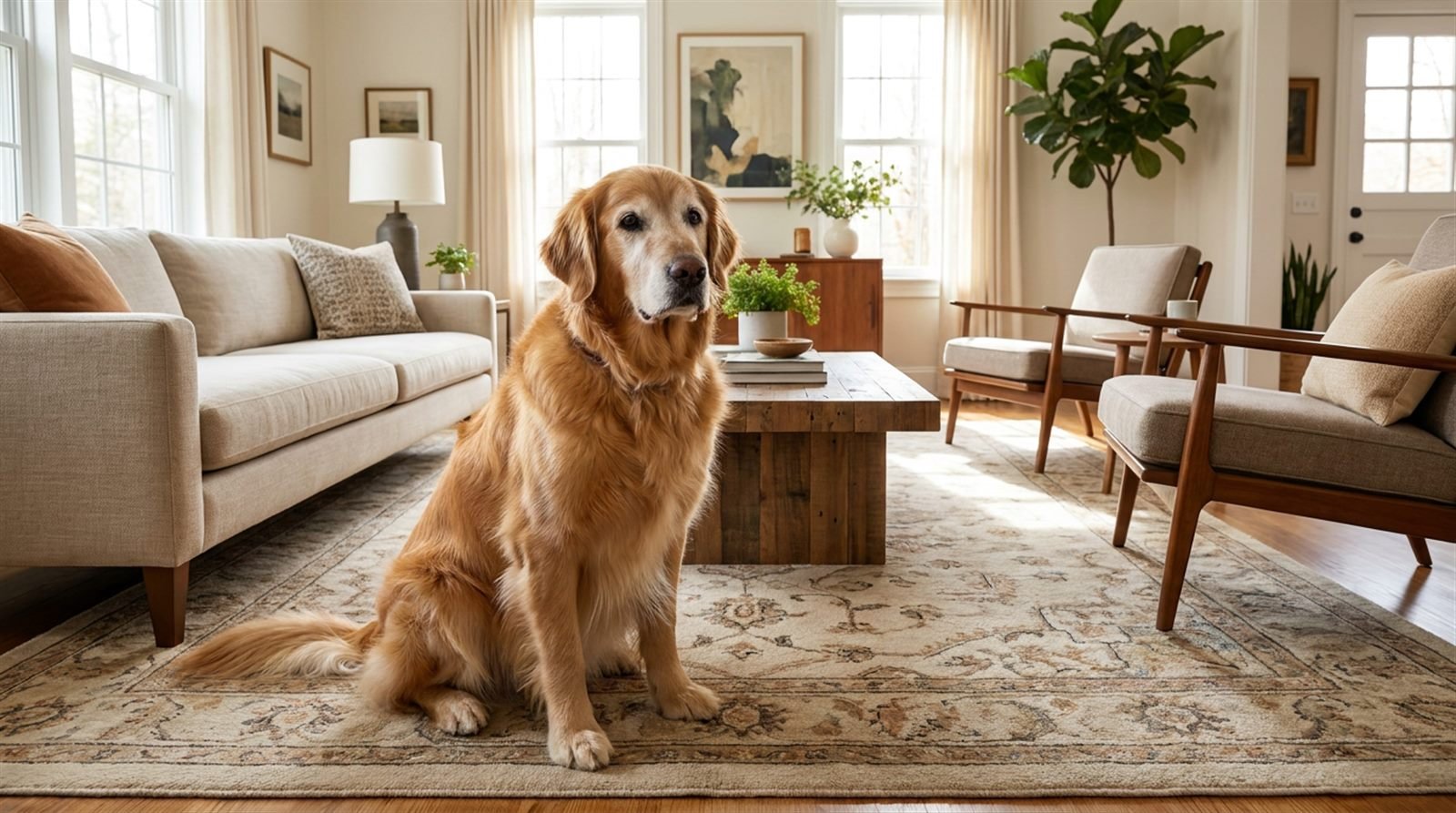
Why there is no single number
The American Animal Hospital Association defines the senior life stage as the final 25% of a dog's estimated lifespan, through to the end of life. It is a proportion, not a birthday — and that is the whole reason the question is confusing.
Think of two dogs turning seven on the same afternoon. A Chihuahua at seven has, on average, most of its life still ahead. A Great Dane at seven is already past the point where its vet should be watching closely. Same number, entirely different situations.
The age chart by size
| Size | Typical weight | Becomes senior | Examples |
|---|---|---|---|
| Small | Under 20 lb / 9 kg | 10 to 12 years | Yorkshire Terrier, Chihuahua, Dachshund |
| Medium | 20–50 lb / 9–23 kg | around 9 years | Beagle, Border Collie, Cocker Spaniel |
| Large | 50–90 lb / 23–41 kg | 7 to 8 years | Labrador, German Shepherd, Golden Retriever |
| Giant | Over 90 lb / 41 kg | around 6 years | Great Dane, Mastiff, Saint Bernard |
These are starting points, not verdicts. Your vet may put your dog in the senior bracket earlier or later depending on breed, health history and how the dog is actually doing.
Why do big dogs age faster?
It runs against intuition — in most of the animal kingdom, bigger species live longer. Elephants outlive mice by decades. But within dogs, the pattern flips: the bigger the breed, the shorter the life.
Researchers have not settled the question completely. The leading explanation is that large breeds grow enormously fast in their first year, and that accelerated growth appears to carry a cost later — earlier onset of age-related disease, and a shorter overall run.
What matters for you is the practical consequence: you cannot use another owner's dog as a reference. Your neighbor's Labrador being "still young at seven" tells you nothing about your Chihuahua, and vice versa.
What actually changes when your dog turns senior?
Not the dog, on that day. What changes is the monitoring.
Twice-yearly check-ups instead of annual
This is the single most useful change, and the one most owners skip. Veterinary guidance recommends senior dogs be examined every six months rather than once a year. The reasoning is simple arithmetic: a dog ages faster than we do, so twelve months is a long gap in which something can develop unnoticed.
Baseline bloodwork
Getting numbers on record while your dog is well is what makes later numbers meaningful. A kidney value that is technically within range but has moved a lot since last year says something that a single reading never could.
Pain gets looked for, not waited for
Arthritis is common in older dogs and dramatically under-treated, largely because dogs hide it well and owners read it as slowing down. A vet who knows your dog is now senior goes looking for it instead of waiting to be told.
Weight matters more
Extra weight on aging joints changes an older dog's comfort more than almost anything else you can control at home.
Is slowing down just normal aging?
Short answer: sometimes, and less often than owners assume. "He's just getting old" is not a diagnosis, and it is wrong more often than it is right. Stiffness after lying down, hesitation at stairs, and losing interest in walks are the three that get filed under age most often — and all three are usually pain.
A dog aging normally sleeps a bit more and plays a bit less. A dog that changed noticeably over a few weeks is telling you something else.
We put the full breakdown in its own guide: signs your dog is slowing down — and what's actually normal, with a side-by-side table of normal aging versus pain, the stiffness test, and the red flags that mean call your vet today.
What is worth doing this week
If your dog has crossed into the senior bracket, three things cost nothing and are worth more than any purchase:
- Book the six-month check. Put it in the calendar now rather than waiting for the annual reminder.
- Film your dog getting up. Thirty seconds, from lying to standing to the first few steps. Do it every couple of months. Change is very hard to notice day to day and obvious across two clips.
- Walk through the house at dog height. Slippery floors, a bed that is too thin, a jump onto the sofa that used to be easy. Rugs and a step cost almost nothing and change an older dog's day considerably.
Frequently asked questions
At what age is a dog considered senior?
There is no single age. Veterinary guidance defines senior as the last quarter of a dog's expected lifespan, which means it arrives at different ages depending on size. Small breeds are usually considered senior around 10 to 12, medium breeds around 9, large breeds around 7 to 8, and giant breeds as early as 6.
Why do big dogs become senior earlier than small dogs?
Larger dogs live shorter lives and age faster. A Great Dane and a Chihuahua reach the final quarter of their lifespan at very different ages, so the same birthday means something completely different for each of them.
Does my dog need different care once it is senior?
Yes, mainly in how often it is checked. Veterinary guidance recommends moving from annual to twice-yearly exams for senior dogs, because problems that develop over six months are far easier to treat than ones found a year late.
Is slowing down just normal aging?
Not always, and this is the most common and costly assumption owners make. Reluctance on stairs, stiffness after rest and less interest in walks are frequently pain rather than age. Aging is not a diagnosis, and much of what gets dismissed as getting old is treatable.
Sources
- American Animal Hospital Association — Defining the Senior Patient (2023 Senior Care Guidelines)
- American Animal Hospital Association — 2023 AAHA Senior Care Guidelines for Dogs and Cats (PDF)
- American Animal Hospital Association — Senior Status: Understanding Your Senior Pet's Life Stage