10 Best Calming Solutions for Anxious Dogs in 2026
Advertising disclosure: this article may contain affiliate links. We may earn a commission at no extra cost to you. It never changes our ranking. How we fund our work
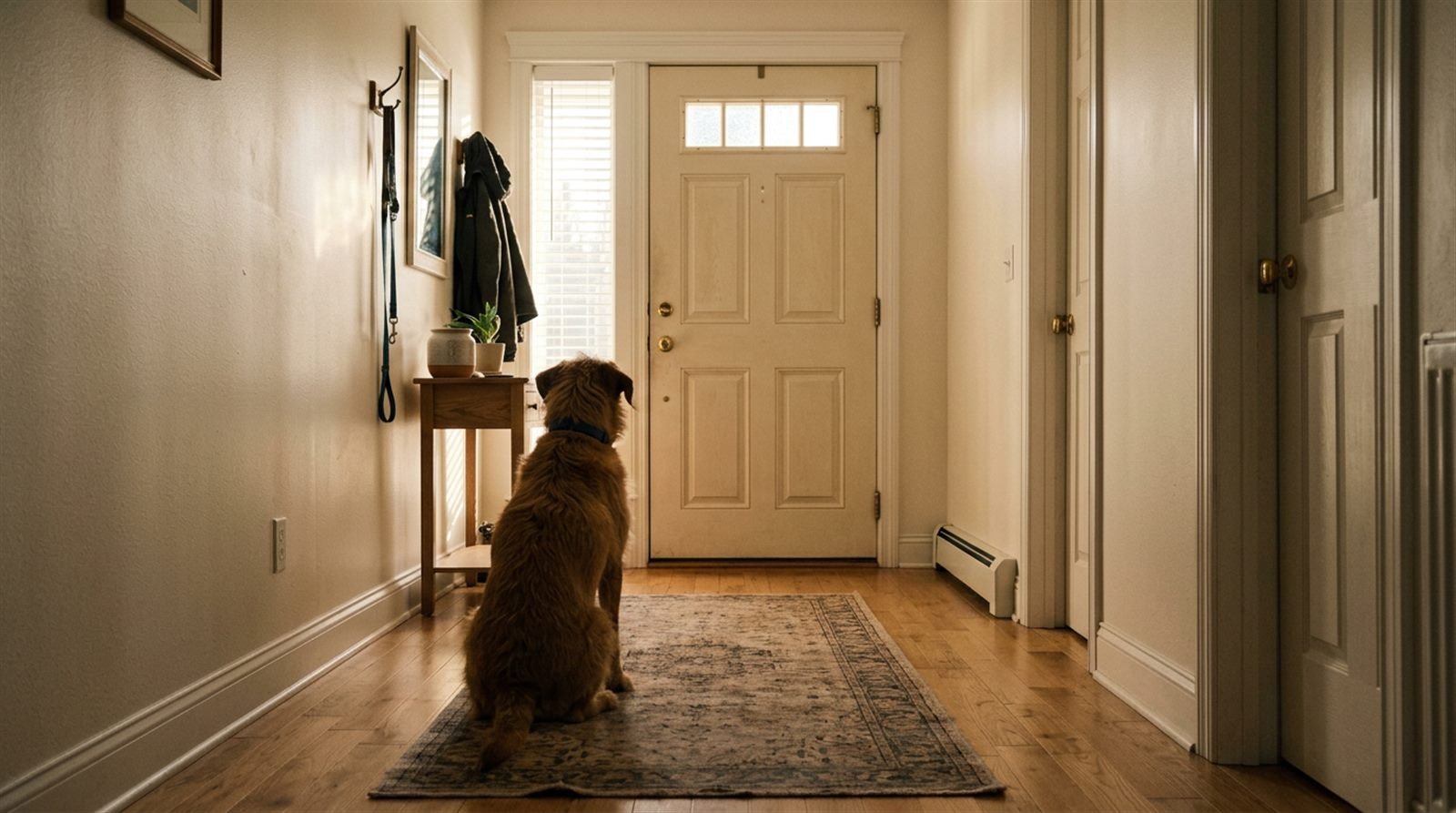
The first time it happened, we were gone for forty minutes. We came back to a scratched doorframe, a dog panting like he had run a mile, and a neighbor who had already texted twice.
What follows is the list we wish we had that week. It is ordered the way we would actually spend money — the free changes first where they belong, the paid options where they earn their place, and the two entries at the bottom that are not products at all, because sometimes the honest answer is a phone call to a professional.
For most anxious dogs, the thing that moves the needle is a structured behavior plan built on desensitization and counterconditioning — not a product. Calming supplements, pheromones and pressure wraps can take the edge off mild, predictable stress, and they are worth trying, but they support the plan rather than replace it. If your dog panics when left alone, injures itself, or has any bite history, skip the shopping and start with a veterinarian.
Quick comparison
The five approaches we would consider first, in the order we would try them. Full write-ups below.
| Approach | Best for | What it actually does | |
|---|---|---|---|
| Structured behavior program Best overall |
Any dog, any severity | Changes the emotional response, not just the symptom | See details |
| Calming supplement Best for mild stress |
Mild, predictable stress | Takes the edge off — modest, and not for panic | See details |
| Pheromone diffuser Best for the home |
Background environment | Low risk, mixed evidence, runs all day | See details |
| Pressure wrap Best budget option |
Storms and fireworks | One-off cost; about half of dogs respond | See details |
| Enrichment and food puzzles Best for home-alone dogs |
Boredom and the first hour alone | Occupies the hardest part of an absence | See details |
The 10 calming solutions, compared
Structured behavior program
Best overallCalming supplement
Best for mild stressPheromone diffuser
Best for the homePressure wrap
Best budget optionEnrichment and food puzzles
Best for home-alone dogsPet camera with treat dispenser
Sound masking
Window film and visual barriers
A consultation with a credentialed behavior professional
Not a productThere is no affiliate link here and there never will be. For moderate to severe cases, an hour with a veterinary behaviorist (DACVB) or a certified behavior consultant is worth more than everything above it on this list combined, because your plan gets built around your dog instead of around an average dog.
Signs it is time: your dog injures itself or damages exits when alone, there is any bite history, the behavior appeared suddenly, or four weeks of consistent work has produced nothing.
Prescription medication, through your veterinarian
Not a productTwo medications are FDA-approved in the United States specifically for canine separation anxiety, and they are prescribed alongside a behavior plan — never instead of one. Only a licensed veterinarian can decide whether medication is right for your dog.
It is included because owners are often told medication is a last resort or a failure of effort. For a dog that cannot stay under threshold long enough to learn anything, medication is sometimes what makes the training possible at all.
How to choose a calming solution for your dog
Is it anxiety, or is it boredom?
These look identical from the outside and need opposite plans. A bored dog chews the sofa and then naps. An anxious dog cannot settle at all, and the distress peaks in the first fifteen minutes after you leave. Set up a camera for two absences before you buy anything.
How predictable is the trigger?
Predictable and time-limited — storms, fireworks, a car ride — is where supplements, wraps and pheromones do their best work. Unpredictable and constant is where they disappoint, and where a structured plan is the only thing that compounds.
What is your dog's threshold?
Threshold is the point where your dog stops being able to think and starts reacting. Everything in modern behavior work happens below it. If a product lets you work at a closer distance or a longer absence while the dog stays under threshold, it is doing real work. If it just makes a panicking dog quieter, it is hiding the problem.
What does it cost over a year?
A one-off program or wrap is a single number. Supplements, pheromone refills and subscriptions are a monthly number that quietly turns into the biggest line on the list. Multiply by twelve before you decide.
What the guidance actually says about aversive tools
The American Veterinary Society of Animal Behavior's 2021 position statement recommends reward-based methods only, and specifically discourages shock, prong and choke collars. For an anxious dog the reasoning is straightforward: punishment suppresses the visible signals while leaving the underlying fear untouched, which makes the dog less predictable, not more.
Our selection process
We started from the interventions that appear in current veterinary behavior guidance — the AAHA behavior management guidelines, the ASPCA's separation anxiety and leash reactivity protocols, and the AVSAB position statement on humane training — and then asked which consumer products serve those interventions rather than compete with them.
Anything requiring pain, startle or intimidation was excluded on principle, regardless of how well it sells. Anything promising to resolve anxiety without owner involvement was excluded as implausible.
The remaining categories were ranked by how much of the actual problem they address, not by commission. That is why the free environmental changes outrank several paid products, and why the last two entries are a phone call and a veterinary appointment.
Frequently asked questions
Do calming supplements actually work for dogs?
For mild, predictable stress some dogs respond to ingredients such as L-theanine, alpha-casozepine and tryptophan. Evidence is modest and inconsistent, and no supplement resolves true separation anxiety on its own. Treat them as support for a behavior plan, not a replacement for one.
How long does it take to calm an anxious dog?
Mild cases often improve within two to four weeks of consistent daily sessions. Moderate to severe separation anxiety commonly takes several months, because desensitization has to move slowly enough that the dog never rehearses panic. Our timeline guide breaks this down by severity.
Are shock collars or prong collars effective for anxiety?
No. The American Veterinary Society of Animal Behavior recommends reward-based methods only, and specifically discourages aversive tools. Punishing an anxious dog suppresses the warning signs while leaving the fear intact, which can make behavior less predictable.
When should I see a veterinarian about my dog's anxiety?
Book a visit if the behavior started suddenly, if your dog injures itself or damages exits when alone, if there is any bite risk, or if four weeks of consistent work produces no change. Pain and medical conditions frequently present as behavior problems.
Is there medication approved for dog separation anxiety?
Yes. Two medications are FDA-approved in the United States for canine separation anxiety and are prescribed alongside a behavior plan, never instead of one. Only a licensed veterinarian can assess whether medication is appropriate for your dog.
Can I fix dog anxiety without buying anything?
Often you can meaningfully reduce it. Distance management, blocking visual triggers, sound masking, a predictable departure routine and daily enrichment cost nothing and resolve a surprising share of mild cases. Start there before you spend money.
Sources
- American Veterinary Society of Animal Behavior — Position Statement on Humane Dog Training (2021)
- American Veterinary Society of Animal Behavior — Position statements and public handouts
- ASPCA — Separation Anxiety
- ASPCA Professional — Reactive Dogs on Leash (PDF)
- American Animal Hospital Association — Canine and Feline Behavior Management Guidelines (PDF)
- American Animal Hospital Association — Sample case: canine separation anxiety